Deconstruction Instead of Demolition: How an Old House Becomes a Tiny Home
What happens when a house slated for demolition gets taken apart instead, and where the lumber, doors and windows end up.
October 16, 2026 · 4 min read
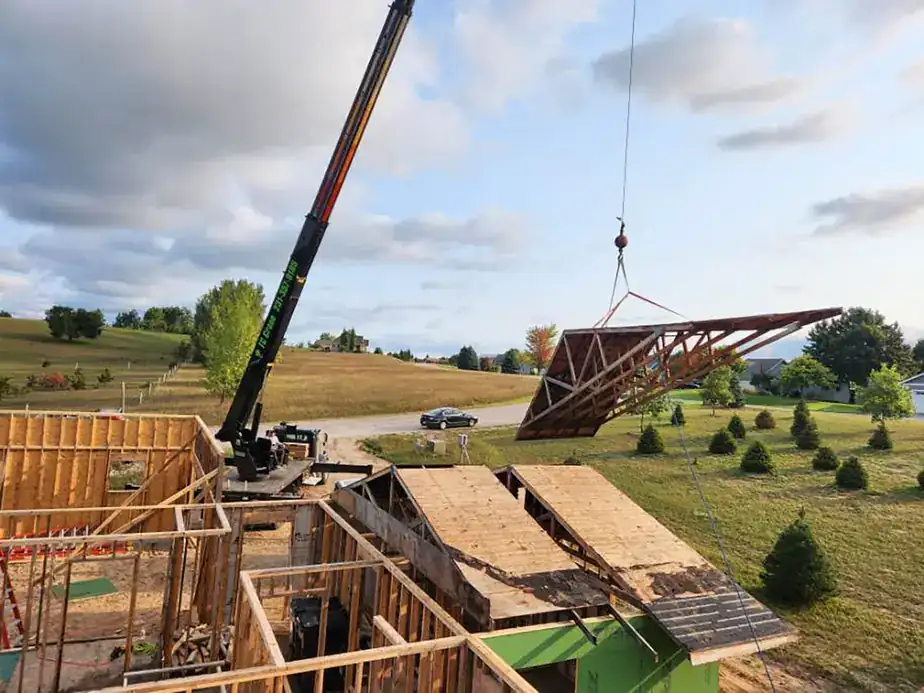
When a house comes down the usual way, an excavator does the work in an afternoon and a line of dumpsters hauls the evidence away. Everything in it, the framing lumber, the doors, the windows, the old light fixtures, ends up as one pile. Deconstruction runs the build in reverse. Crews take a house apart piece by piece so the parts can be used again. BARC calls its version De/Re Construction, and its tagline says it all: where affordable housing meets recycling.
Deconstruction versus demolition, in plain terms
Demolition is fast because nothing has to be saved. Deconstruction is slower because everything worth saving gets removed carefully and sorted. That means taking off windows and doors before the walls come down, pulling usable lumber and de-nailing it, and separating metal, siding and fixtures from the rest. It is more labor up front, and the payoff is material that can go back into a building instead of into a landfill.
BARC deconstructs homes slated for demolition, and its De/Re Construction page says it does so "at demolition market rates AND offer you the homeowner a tax rebate". The program is open to local homeowners. If you own an old house in the Traverse City area that is on its way out, a call to (231) 632-2272 is the first step, and the De/Re Construction page explains how the program works. As for the tax rebate, ask BARC how it works for your property, and check with your own tax adviser before you count on a number.
Where the salvage goes
The materials from De/Re jobs end up in a few places. Some become tiny homes built from salvaged materials. Others become repurposed products such as picnic tables, flower boxes, garden trellises, chicken coops and greenhouses, which BARC builds from demolition materials and offers with pick-up or delivery for a small fee. The idea is that the house keeps working after the walls are gone.
You can also bring salvage in yourself. The 2026-27 sheet lists DE/RE materials with drop-off prices, so a contractor or a homeowner with a pile from a remodel knows what to expect:
- Single doors and windows: $30
- Sliding doors: $100
- Siding, per 100 square feet or per cubic yard: $100
- Lumber longer than 4 feet and de-nailed, or tile, per cubic yard: $50
- Light fixtures and fans: $25
- Plastic, metal or wood blinds: $10
- Dressers, desks and bookcases, metal or wooden: $40
The five tiny-home models
BARC builds tiny homes from salvaged materials, and each one is unique. Sizes run from about 100 square feet up past 400. The five models, with BARC's "starting at about" prices:
- The Open Air, 100 square feet: about $5,000
- The Life Pod, 100 square feet: about $10,000
- The Cozy Cottage, 200 square feet: about $20,000
- The Minimalist, 300 square feet: about $30,000
- The Mini Mansion, 400 square feet: about $40,000
Because every home is built from whatever the deconstruction yields, no two look alike, and a price that starts at a number is a starting point, not a quote. Call to talk through the model, the finish and the delivery before you decide. The tiny homes by BARC page shows the current models.
What a BARC tiny home is, and is not
Know what you are buying. The standard build is a four-wall, weather-tight structure with doors, windows and a roof. The inside is bare studs, and the roof is OSB topped with asphalt shingles or metal. There is no power or running water inside. BARC suggests uses such as a she-shed or a rustic glamping cabin, and that is a good way to picture it: a solid, finished shell you can set up for your own purposes, not a ready-to-live-in house.
If you plan to place one on your land, check with your township about permits and zoning before you order. Rules differ from one community to the next, and the answer for a backyard studio may not match the answer for something you would sleep in. A few phone calls ahead of time save an awkward conversation after delivery.
If you have a house coming down
Start with the basics. How old is the house, when is it scheduled to come down, and do you have a demolition quote in hand? That gives BARC something to compare against. Mention it when you call (231) 632-2272, and ask about timing, since a deconstruction crew needs more days on a site than a demolition crew does. BARC also says a builder partner list is coming soon, so ask whether it is ready when you call.
If you are not tearing anything down, the same program still matters to you. Buying a tiny home, a picnic table or a salvaged door keeps that material in use. Browse the repurposed products page, the De/Re Construction page and the tiny homes page to see what is available today.
Bay Area Recycling for Community, (231) 632-2272
Call (231) 632-2272More articles
What It Really Costs to Get Rid of a Mattress, Fridge or TV in Northern Michigan
Three of the bulkiest things in any house, priced out line by line, with the pickup fee and the rebates that can change the math.
If It Has a Cord or a Battery: A Practical E-Waste Guide for Northern Michigan
One easy rule covers most of what piles up in your garage, plus the exceptions that catch people out and a free program for Leelanau residents.